
 EN
EN 
Company news
当前位置:首页>>NEWS>>Company news

当前位置:首页>>NEWS>>Company news
Company news
In today's intelligent manufacturing era, custom automation equipment stands as a pivotal force driving industrial transformation, distinguished by its high flexibility and tailored solutions. As a specialized enterprise based in Yangzhou focused on the R&D and manufacturing of automated systems, we possess extensive expertise in custom automation. This article provides a systematic overview of custom automation equipment—from its core principles and industry-specific implementations to emerging trends—to foster a deeper understanding of this field.
Demystifying Custom Automation Equipment
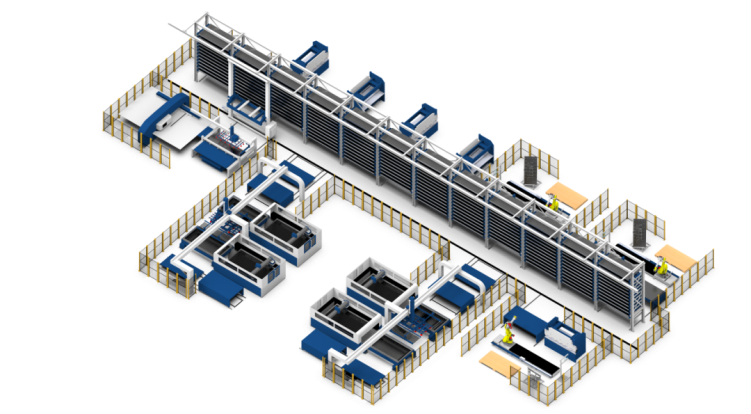
Custom automation equipment refers to systems specifically engineered to meet unique client requirements and adapt to specialized production processes. Unlike standardized machinery designed for general applications, custom solutions are developed to address distinct operational workflows, precision demands, and spatial constraints.
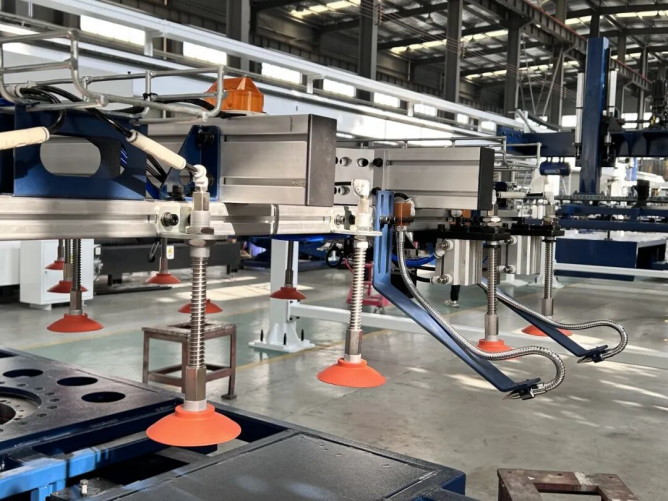
In terms of mechanical design, such equipment offers exceptional layout adaptability, capable of integrating into confined or complex production environments. Functionally, it enables process innovation through customized motion control systems, machine vision integration, and precision assembly modules, solving production challenges beyond the scope of standardized alternatives.
The Development Journey of Custom Automation Equipment
Requirement Analysis and Process Evaluation
Each project begins with an in-depth technical consultation. Our engineering team collaborates closely with clients to define key parameters, including cycle time, equipment uptime, product tolerances, and operational environment specifications.
Solution Design and Simulation Validation
Based on finalized requirements, our technical team proceeds with conceptual and detailed design, encompassing:
Mechanical Design: Overall layout planning, kinematic mechanism design, and selection of drive and guidance components to ensure structural integrity and motion accuracy.
Electrical and Control Design: Development of a PLC- or industrial PC-based control architecture, integrating sensor networks, servo drives, and pneumatic systems to form the equipment’s operational core.
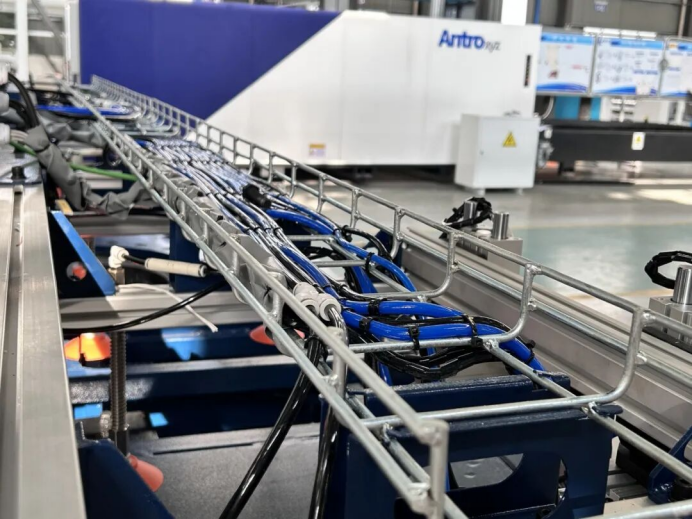
Simulation Validation: Utilization of 3D motion and process simulation to pre-verify functionality and prevent mechanical interference.
Precision Manufacturing and Supply Chain Coordination
Upon design approval, components are sourced and fabricated. Standard parts are procured through certified channels, while custom-critical components are manufactured in-house using CNC machining, laser cutting, precision welding, and surface treatment technologies to ensure quality and timeline adherence.
System Integration and Comprehensive Debugging
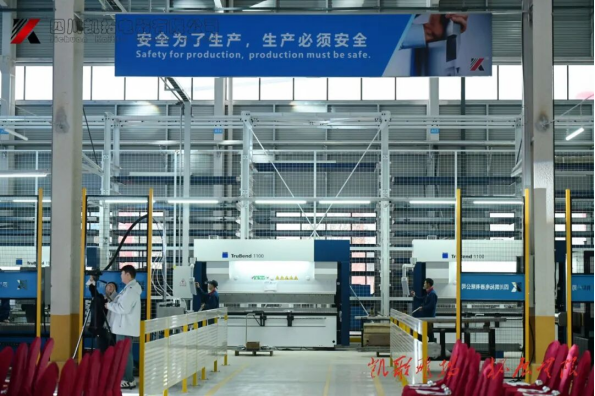
All components are assembled in a controlled environment. Subsequently, our electrical engineers execute cabinet wiring, PLC/HMI programming, and servo tuning. The system undergoes unit testing, integrated dry-run testing, and material-run testing to validate stability, repeatability, and overall equipment effectiveness (OEE).
Factory Acceptance Testing (FAT) and Project Handover
Prior to delivery, clients are invited to witness Factory Acceptance Testing, where equipment performance is verified against agreed specifications. Post-acceptance, we provide operational training and ongoing technical support to ensure seamless integration into production and long-term reliability.